


Welcome — 150 illustrated exercises
Weight training exercises
↔ Free, no registration required ▶ Guided tour
Create your own session, then follow it in the gym.
Choose your exercises from the library, then follow your session at the gym: weights, repetitions and rest time.
- 1 Add exercises
- 2 Set sets and rest
- 3 Note your weights




My notebook
Your personal workout notebook
Sessions you build live only in your browser — no account, nothing uploaded.
By muscle group
 Quadriceps exercises
17 exercises
 Glutes exercises
13 exercises
 Back exercises
24 exercises
 Shoulders exercises
17 exercises
Abdominals exercises
14 exercises
 Hamstrings exercises
13 exercises
 Chest exercises
20 exercises
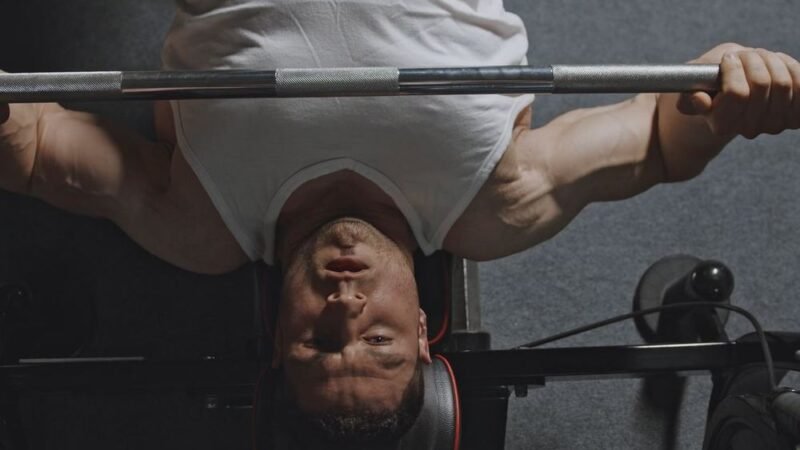 Triceps exercises
12 exercises
 Biceps exercises
12 exercises
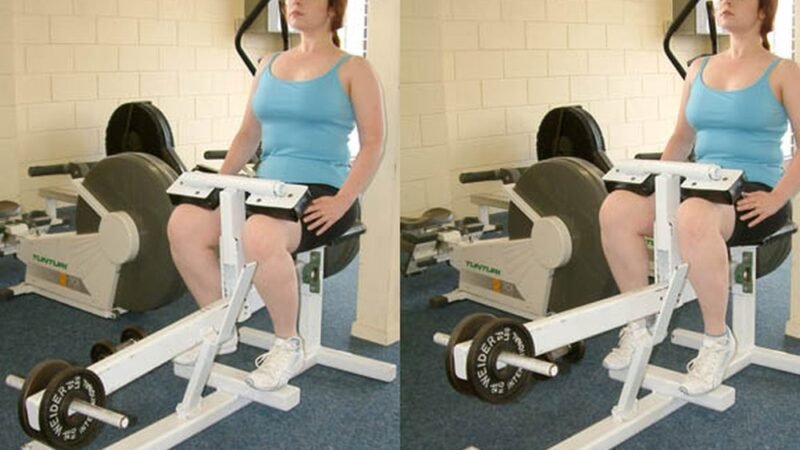 Calves exercises
8 exercises
Advertisement
AdSense slot — in_content
Add your publisher + unit IDs in Customizer → AdSense
Add your publisher + unit IDs in Customizer → AdSense
By equipment
Other categories
Advertisement
AdSense slot — in_content
Add your publisher + unit IDs in Customizer → AdSense
Add your publisher + unit IDs in Customizer → AdSense
All exercises, from A to Z


















































Frequently Asked Questions
What is a repetition (a “rep”)?
One complete performance of a movement — for example, one full squat down and back up. Reps are the smallest unit of a workout: sets are built from them, and the rep range you choose shapes the training effect. Very low reps (1–5) bias strength, moderate reps (6–15) bias muscle growth, and high reps bias local endurance, though all three overlap in practice.
What is a set (a “series”)?
A set is a group of consecutive repetitions performed before you rest. “3 × 10” means three sets of ten reps, with a rest after each set. Sets let you accumulate enough quality work on a muscle without doing it all in one exhausting bout.
What is rest time?
The pause between two sets. Short rests (30–60 seconds) keep sessions dense and suit isolation exercises; longer rests (2–5 minutes) let you recover fully for heavy compound lifts and usually allow more total weight lifted. The right rest is the one that lets the next set be performed well.
What is training volume?
The total amount of work you do, most simply counted as hard sets per muscle per week (or sets × reps × weight). Volume is the main dial for muscle growth: too little and nothing adapts, too much and recovery fails. Most lifters progress well on roughly 10–20 hard sets per muscle group per week, spread over two or more sessions.
What is a supinated grip?
A grip with the palms facing up (or toward you), as in a chin-up or a standard biceps curl. Supination lets the biceps contribute more strongly, which is why chin-ups usually feel easier than pull-ups for beginners.
What is a pronated grip?
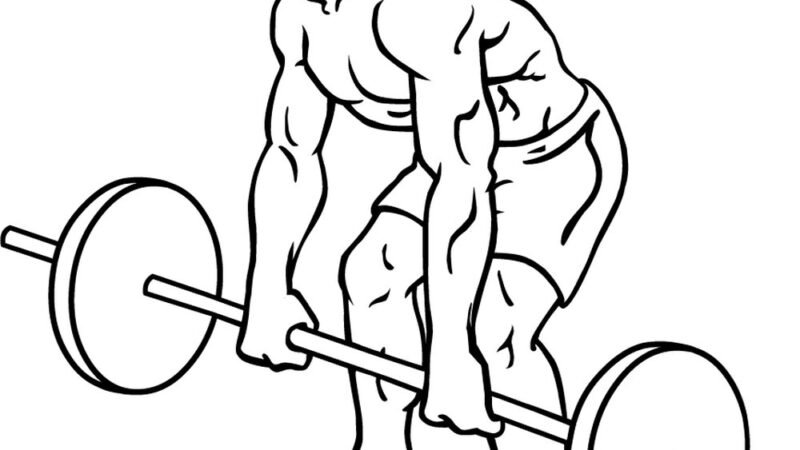
A grip with the palms facing down (or away from you), as in a pull-up or a prone row. Pronation shifts some work from the biceps to the forearm extensors and the back muscles, and it is the standard grip for most barbell rows and deadlift variations.
What are the best weight training exercises?
The ones that load the fundamental patterns — squat, hinge, push, pull and carry — progressively, with technique you can repeat safely for months. A barbell squat is not magically better than a leg press if the leg press is the one you can load hard and consistently. Choose per pattern, per your body and your equipment, then progress patiently.
Why do weight training exercises?
Progressive resistance training builds muscle and strength, supports bone density, improves glucose control and joint function, and helps people stay capable as they age — which is why health guidelines recommend muscle-strengthening activity at least twice a week for adults. It also tends to improve body composition more reliably than cardio alone.