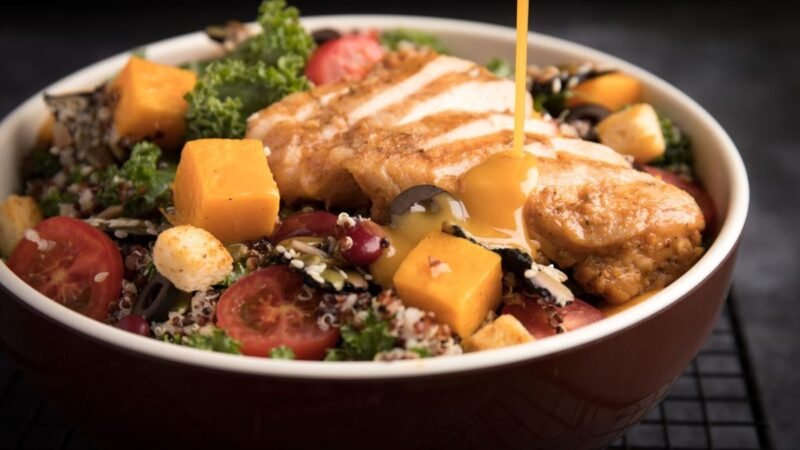
DASH — Dietary Approaches to Stop Hypertension — is one of the few eating patterns that began as a clinical trial intervention rather than a popular diet. In the original 1990s studies funded by the US National Institutes of Health, researchers fed participants a diet rich in vegetables, fruits and low-fat dairy, with whole grains, poultry, fish and nuts, and limited red meat, sweets and saturated fat. Blood pressure fell within two weeks, even though weight was deliberately held constant.
The average effect was meaningful: systolic pressure dropped by about 5-6 mmHg overall, and by roughly 11 mmHg in participants who already had hypertension — comparable to the effect of a single blood-pressure medication for some people. A follow-up trial, DASH-Sodium, showed that combining DASH with lower sodium intake produced still larger reductions.
What a DASH day looks like
DASH is described in servings rather than forbidden foods. For a roughly 2,000 kcal pattern, the daily targets are approximately:
- 6-8 servings of grains, at least half whole grain
- 4-5 servings of vegetables and 4-5 of fruit
- 2-3 servings of low-fat or fat-free dairy
- Up to 6 servings of lean meat, poultry or fish (a serving is about 30 g cooked)
- 4-5 servings per week of nuts, seeds and legumes
- Sweets limited to about 5 small servings per week
The pattern delivers high potassium, magnesium, calcium and fibre — nutrients that each contribute modestly to blood-pressure control — while keeping saturated fat and, in the sodium-reduced version, salt in check.
The sodium question
The original DASH diet worked even at typical sodium intakes, which matters because many people eat more salt than they realise, mostly from processed foods, bread and restaurant meals rather than the salt shaker. The DASH-Sodium trial showed the largest reductions when sodium was cut to about 1,500 mg per day, but intermediate reductions helped too. Reading labels and cooking more from basic ingredients moves sodium intake substantially without any special products.
Beyond blood pressure
Observational studies and smaller trials link DASH-style eating with lower risks of type 2 diabetes, kidney stones, gout and colorectal cancer, and DASH regularly ranks near the top of expert diet comparisons for overall healthfulness. These broader claims rest on weaker evidence than the blood-pressure findings, but the pattern’s composition — minimally processed, plant-rich, adequate protein — aligns well with general dietary guidance.
DASH does not replace medication for people with hypertension, and anyone whose blood pressure is high should be guided by their own clinician. But it is one of the best-evidenced dietary supports available, and its effects can be checked objectively with home or clinic measurements over a few weeks.
In practice, the main barrier is not the pattern’s design but food environment: DASH assumes regular access to fresh produce, plain dairy and unprocessed ingredients, and its sodium targets are hard to reach when most meals come from restaurants or packaged foods. Trials that provided food to participants achieved the full effect; free-living studies show smaller but still worthwhile blood-pressure improvements, roughly proportional to how closely people follow the pattern. Partial adoption is not failure — moving halfway toward DASH targets captures a meaningful share of the benefit.
Practical takeaways
Adopt DASH gradually: add one extra vegetable serving a day, swap one red-meat meal for legumes or fish, choose low-fat dairy, and make half your grains whole. Keep an eye on sodium in bread, cheese, sauces and processed meats, where most of it hides. If you have hypertension, tell your clinician you are changing your diet, since improvements may eventually affect medication needs — a good problem, but one to manage together.